Best Time to Visit Victoria Falls: A Season-by-Season Guide
September 2026 · 4 min read
Victoria Falls is a year-round destination, but the experience changes dramatically with the Zambezi's water levels. The right time to go depends on whether you want the falls at their most powerful, the clearest views, or the best conditions for activities like rafting and swimming at the falls' edge.
February to May: high water
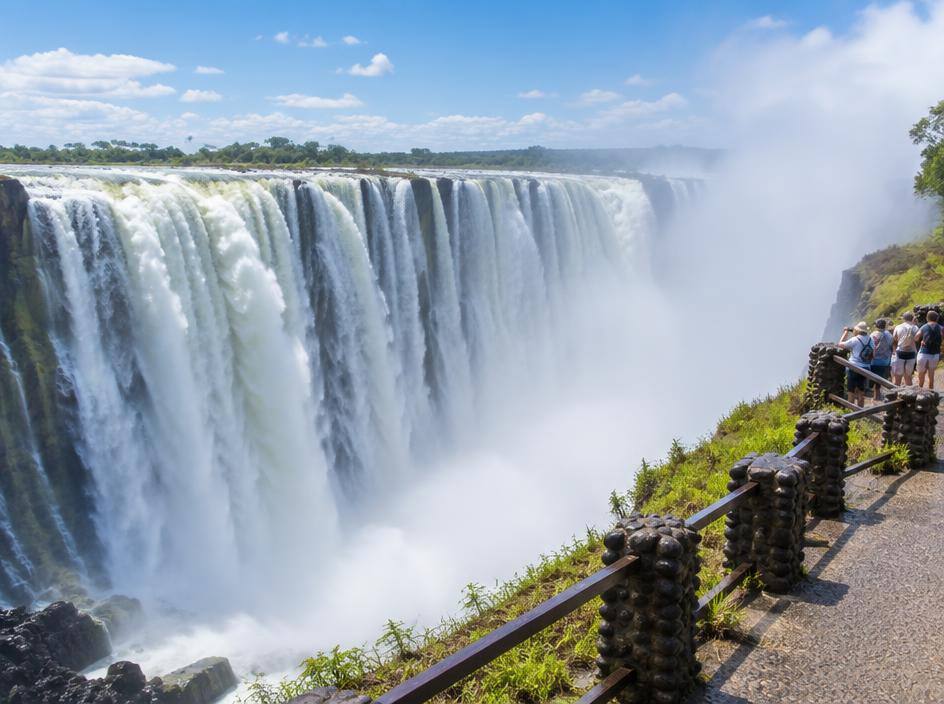
After the rains, the Zambezi swells and the falls become a thundering curtain of water, usually peaking around March to May. This is the most dramatic time to visit — expect towering spray (you will get wet on the viewpoints), rainbows, and a roar you can hear from town.
The trade-off: the spray can obscure the rock face, white-water rafting is usually closed during the highest water, and the Zambian side's low-water activities aren't running.
June to August: the sweet spot
Water levels start dropping while the flow is still strong. Views from the Zimbabwean side are excellent, the weather is mild and dry, and safari conditions in nearby Chobe and Hwange are improving as the bush dries out. For many travellers this is the best all-round window.
September to December: low water
By the end of the dry season the Zambian side can reduce to a trickle, but the Zimbabwean side keeps flowing and the gorge walls are fully visible — great for photography. This is also the season for low-water activities like Devil's Pool and the best white-water rafting (usually from around August).
Temperatures climb sharply in October and November. Game viewing in the region is at its peak as animals concentrate on the river.
So, when should you go?
For the falls at full power: March to May. For a balance of views, weather and activities: June to August. For rafting, Devil's Pool and peak safari: September to November. Whenever you go, book key experiences ahead in high season — popular activities do fill up.